
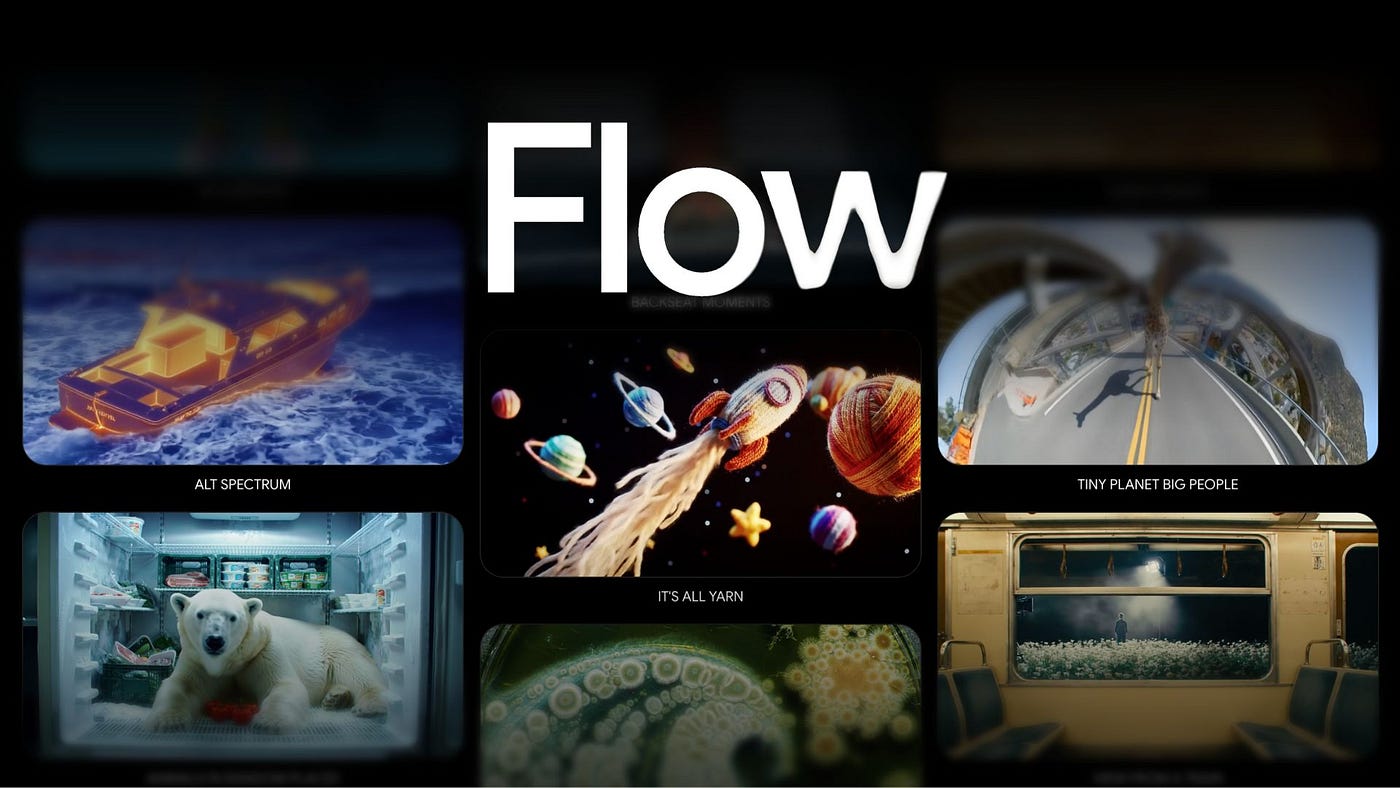
The film industry is no stranger to technological disruption, and Google has taken the next leap with the introduction of Flow, an artificial intelligence-powered application designed to simplify and accelerate filmmaking. Unlike traditional editing and production tools, Flow uses advanced generative AI to assist creators in scripting, visualizing, and producing cinematic content. This move demonstrates Google’s commitment to expanding AI applications beyond productivity and search, directly into creative industries that thrive on storytelling.
For aspiring filmmakers, independent creators, and even marketing teams, Flow offers the possibility of reducing production costs while expanding creative possibilities. The application bridges the gap between professional-level filmmaking and everyday users who may not have access to expensive equipment or large production crews.
How Flow Works Behind the Scenes
At its core, Flow combines natural language processing and generative video technology. Users can input story ideas, character descriptions, or even simple prompts, and the system will generate corresponding visuals, scenes, and transitions. This means that a short film draft can be created within minutes, providing a strong foundation for further refinement.
The app is also equipped with tools that allow creators to adjust camera angles, lighting effects, and even dialogue delivery. Instead of spending days arranging sets or re-shooting scenes, Https://malaka555.sg-host.com/ makes it possible to tweak and regenerate specific parts of a film with minimal effort. Google has emphasized that Flow is not intended to replace human creativity, but rather to function as a collaborator that accelerates the creative process.
Why Flow Matters for the Creative Economy
Google’s Flow could prove transformative for the creative economy, particularly for small production houses and independent artists. In an industry where budget constraints often limit innovation, AI-driven tools like Flow provide a new level of accessibility. Creators who once struggled with technical or financial barriers now have the opportunity to experiment freely, bringing their stories to life with fewer limitations.
Educational institutions are also expected to benefit. Film schools could integrate Flow into their curriculum, enabling students to explore filmmaking techniques without the cost of traditional production. Additionally, advertising agencies and social media influencers may adopt the app to generate short, engaging content at a fraction of the time previously required.
However, the introduction of such technology also raises important questions about originality, copyright, and the role of human filmmakers. As with any AI-powered creative tool, concerns about over-reliance on automation and the dilution of human artistry remain part of the larger debate.
The Future of AI-Powered Filmmaking
While Flow is still in its early stages, the application signals a clear direction for the future of filmmaking. Google has hinted at future upgrades, including integration with professional editing platforms, collaboration features for team-based projects, and support for longer, more complex productions. The roadmap suggests that Flow could eventually evolve into a comprehensive ecosystem for end-to-end film creation.
Industry experts predict that Flow will encourage a wave of experimental films and user-generated projects, reshaping how audiences consume media. At the same time, established studios may adopt the tool to streamline pre-visualization and reduce production risks. Whether used for indie shorts, commercials, or full-length features, Flow highlights how AI is reshaping creativity across industries.
As artificial intelligence becomes more deeply embedded in creative workflows, Google’s Flow is positioned to become both a disruptive force and a collaborative partner in filmmaking. By lowering entry barriers and enabling new forms of storytelling, it sets the stage for a future where anyone with an idea has the tools to transform it into cinematic reality.
0 Comments